FFS. Just because you don’t personally know about something doesn’t mean no one knows about it. I can’t believe how often I have to explain this to people, but this one is personal.
I grew up being taken to the cemetery at the Louisville Zoo and being told that I was related to the people buried there. My mother and my grandmother were unreasonably obsessed with their family lineage, or at least that’s what I thought when I was younger. These people were all long dead, why did this matter at all?
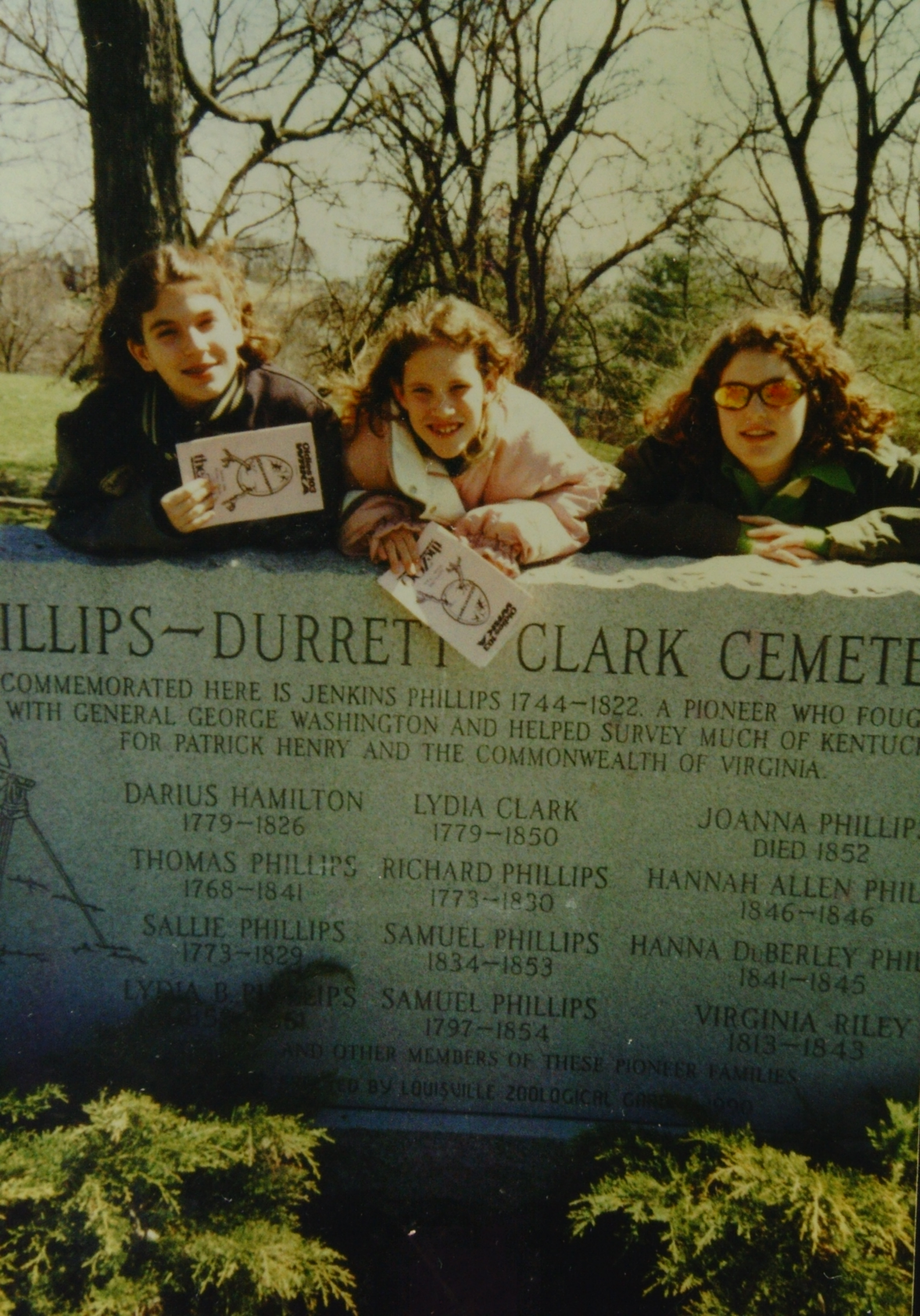
That answer came in 2023 when my grandfather went into hospice. He wasn’t the one related to these people, it was actually my grandmother, but the person who was helping me research his obituary facts took a detour in her research that led to one of the most unexpected genealogy finds, which I will get to in a minute.
Let’s start at the beginning.
Jenkin Phillips, my 6th great-grandfather, was born in 1744 in Fairfax County, Virginia. The area where he was born is now part of Loudoun County, Virginia. His father, Thomas, and mother, Joanne Marple Morgan, came from Wales between 1724 and 1726 according to the birth dates and places of the children born around that time. Thomas and Joanne began in Virginia and then spent 1737 through 1740 in Pennsylvania, where Thomas’ father Sir Griffith Phillips died in 1734. Thomas and Joanne were back in Virginia sometime between 1740 and 1744, as Jenkin Phillips was born in Virginia in 1744.
Hannah Butcher, my 6th great-grandmother, was also born in the Fairfax/Loudoun County, Virginia area. She was born in 1748 and was at least the third generation of her family born in the colonies. She married Jenkin Phillips in 1761, oddly enough in Pennsylvania. They lived in Virginia for the births of their first three children in 1761, 1762, and 1765. By the birth of their fourth child in 1769 they were living in Louisville/Jefferson County, Kentucky. I believe they arrived initially in 1768, but I can’t remember how I came to that conclusion originally. Jenkin and Hannah still owned property in Virginia when they removed to Kentucky. I am unsure when that left the family.
At some point they returned to Virginia and Jenkin Phillips fought in the Virginia Militia in the Revolutionary War. The DAR placed a marker on his grave in 1964.
In 1956, my great-grandmother, Marium Hunter Phillips Fitch, was in the Louisville Courier-Journal regarding a DAR party she helped to plan. My uncle pointed out that the C-J got the names switched. That’s my great-grandmother on the left, not on the right.
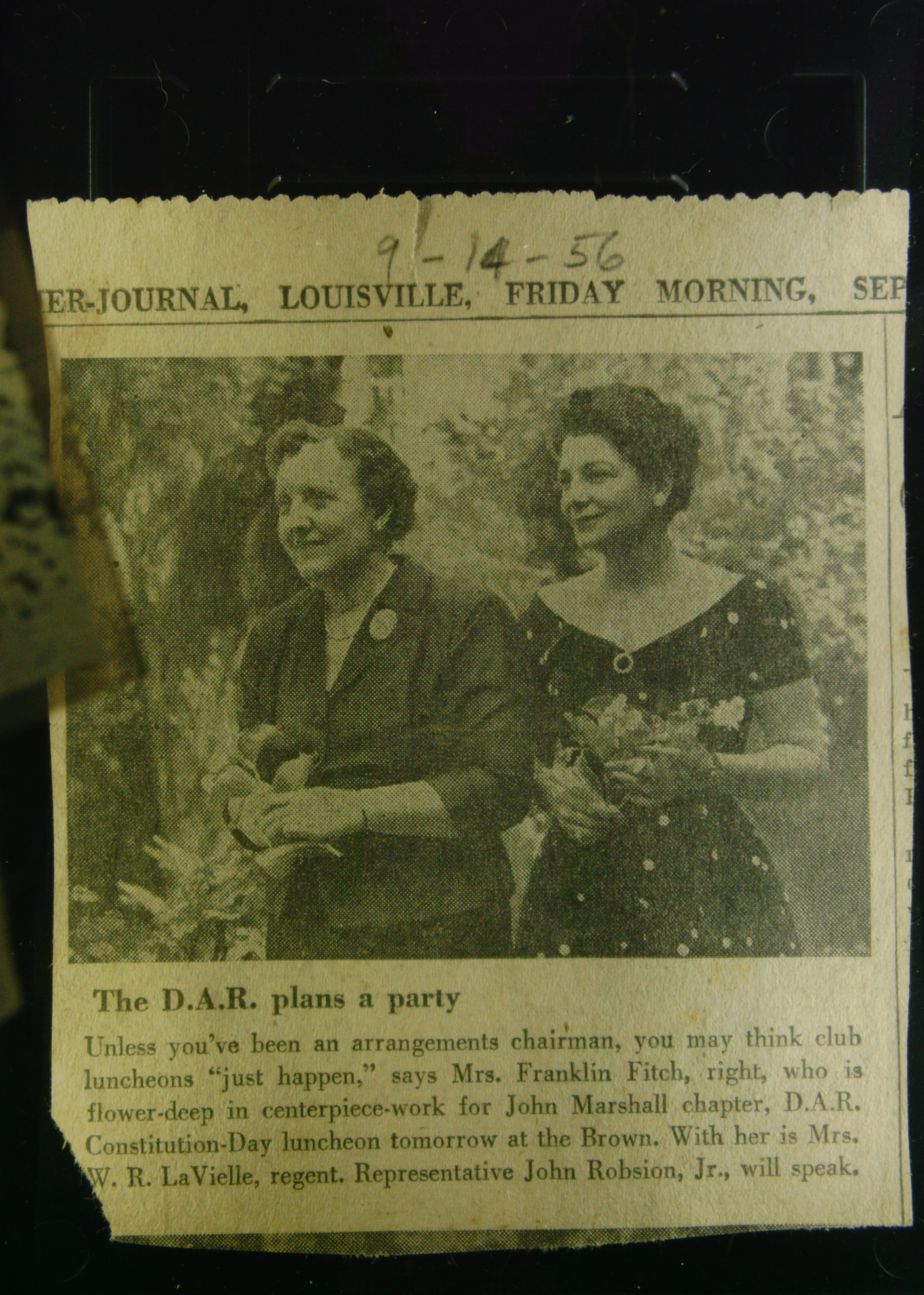
Eight years before the DAR placed a marker for Jenkin Phillips, Marium was already active in the DAR and her application listed Jenkin Phillips as her patriot (that’s what they call their antecedent who fought in the Revolutionary War). She died in 1971 and her first of two obituaries mentioned that she was from “an old pioneer family.”
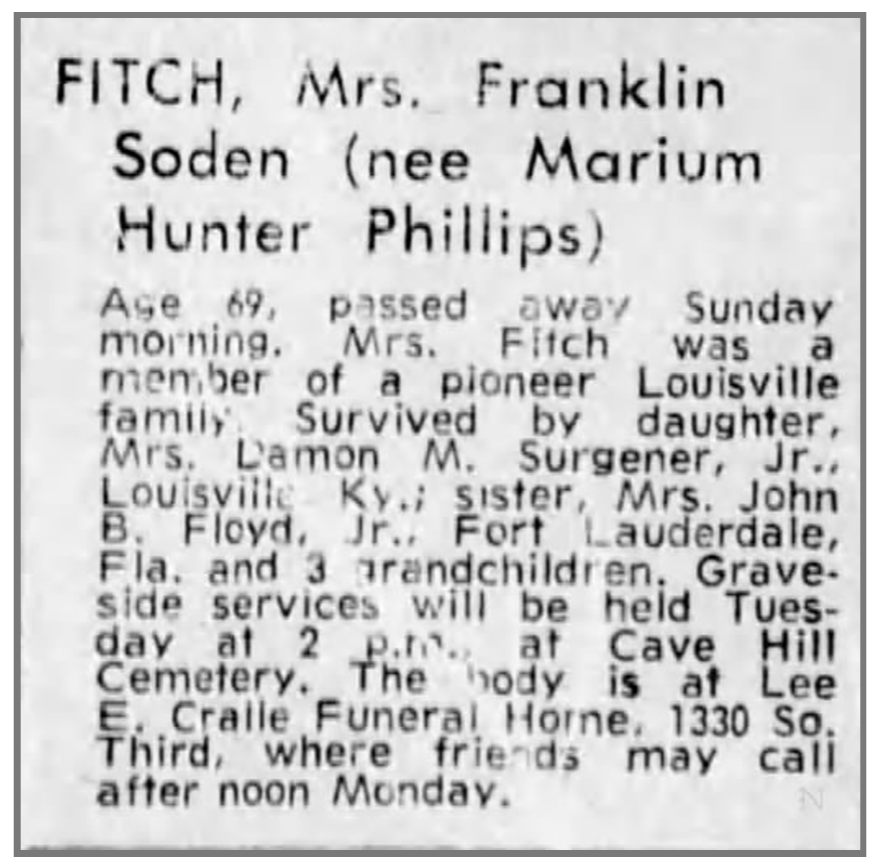
All this is to say that my family knew the cemetery was there. It was never forgotten. And if anyone would have contacted the DAR they likely would have found several descendants right away. Instead they seem to have deemed this an insolvable problem and taken that story to the newspapers. It appears repeatedly, starting in 1964.
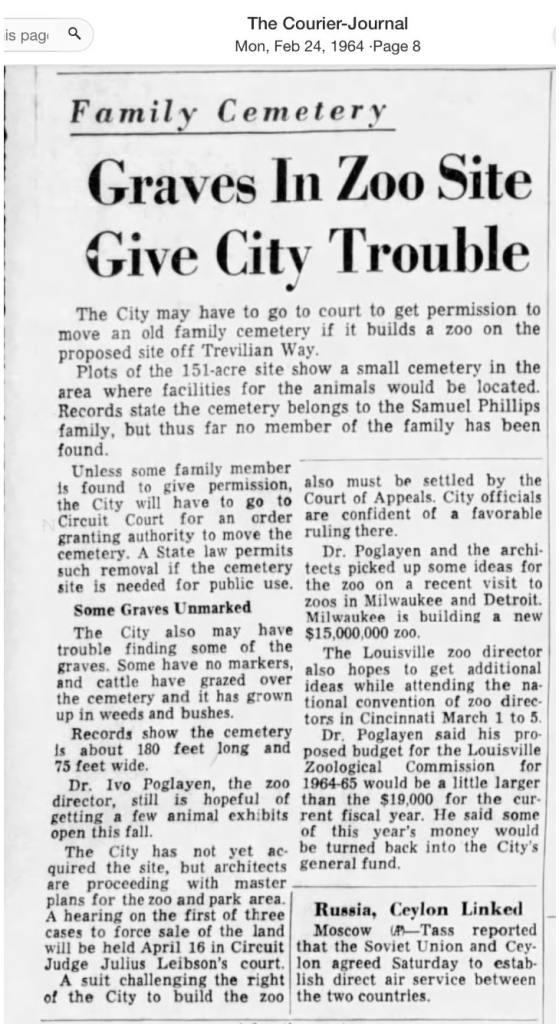
Oh no, the city is in trouble! It wants to build a zoo over a cemetery but can’t find the family to get permission!
Maybe it’s the cynic in me, but it seems like if you don’t even attempt to locate the family through painfully obvious means before declaring they don’t know anyone, something is sus.
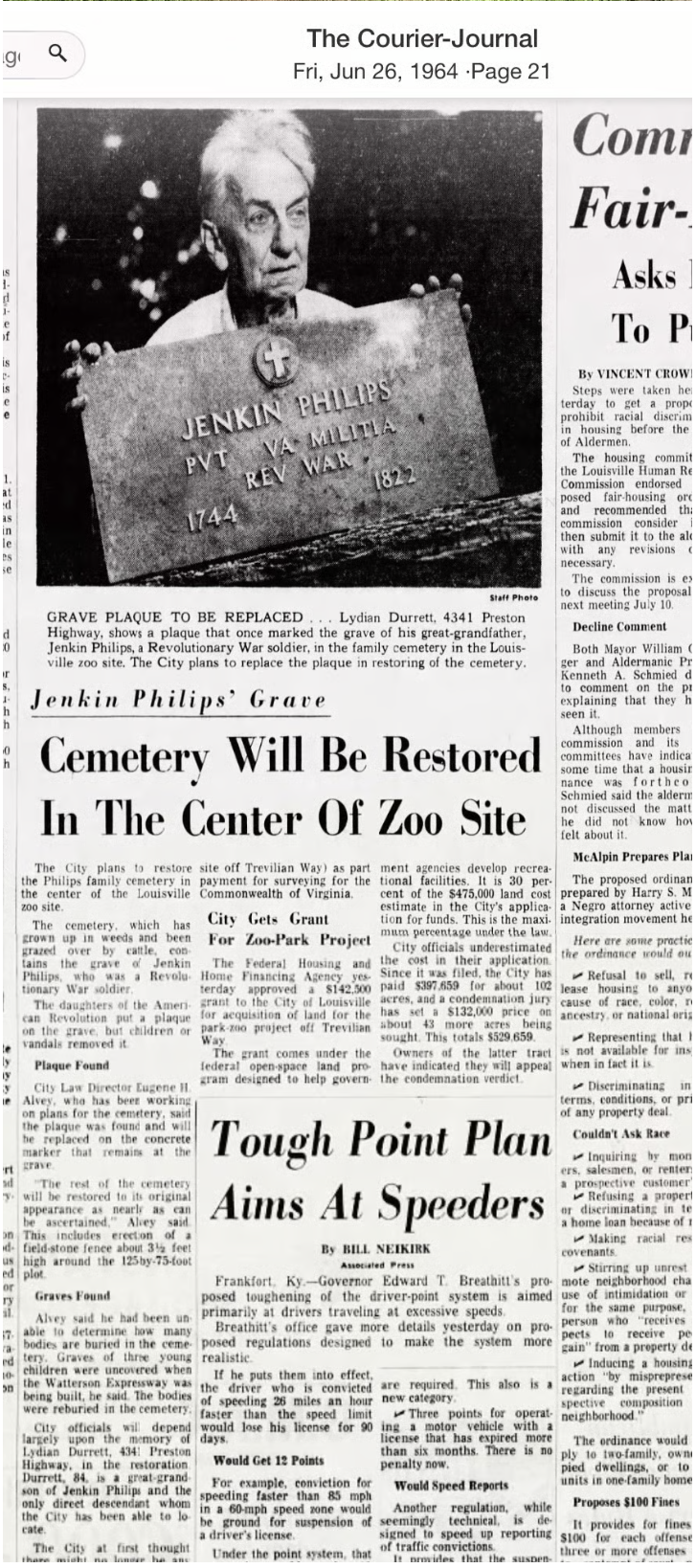
So not only did the city buy the property from a family member who was living at the time, but they located a second family member who lived nearby pretty quickly.
But this narrative continues to come up from time to time. In 2023 several friends sent me a story from a local news station about an “abandoned cemetery at the Louisville Zoo.” The reason several friends sent me the story is because they knew that those were my relatives buried there. Because I know about the cemetery and I talk about it all the time. Because I have been there many times. Because my mother wanted to make sure we knew we were related to the people buried there.
One line in the story gave away the plot, again: “If it was abandoned it could be moved, but that didn’t happen.”
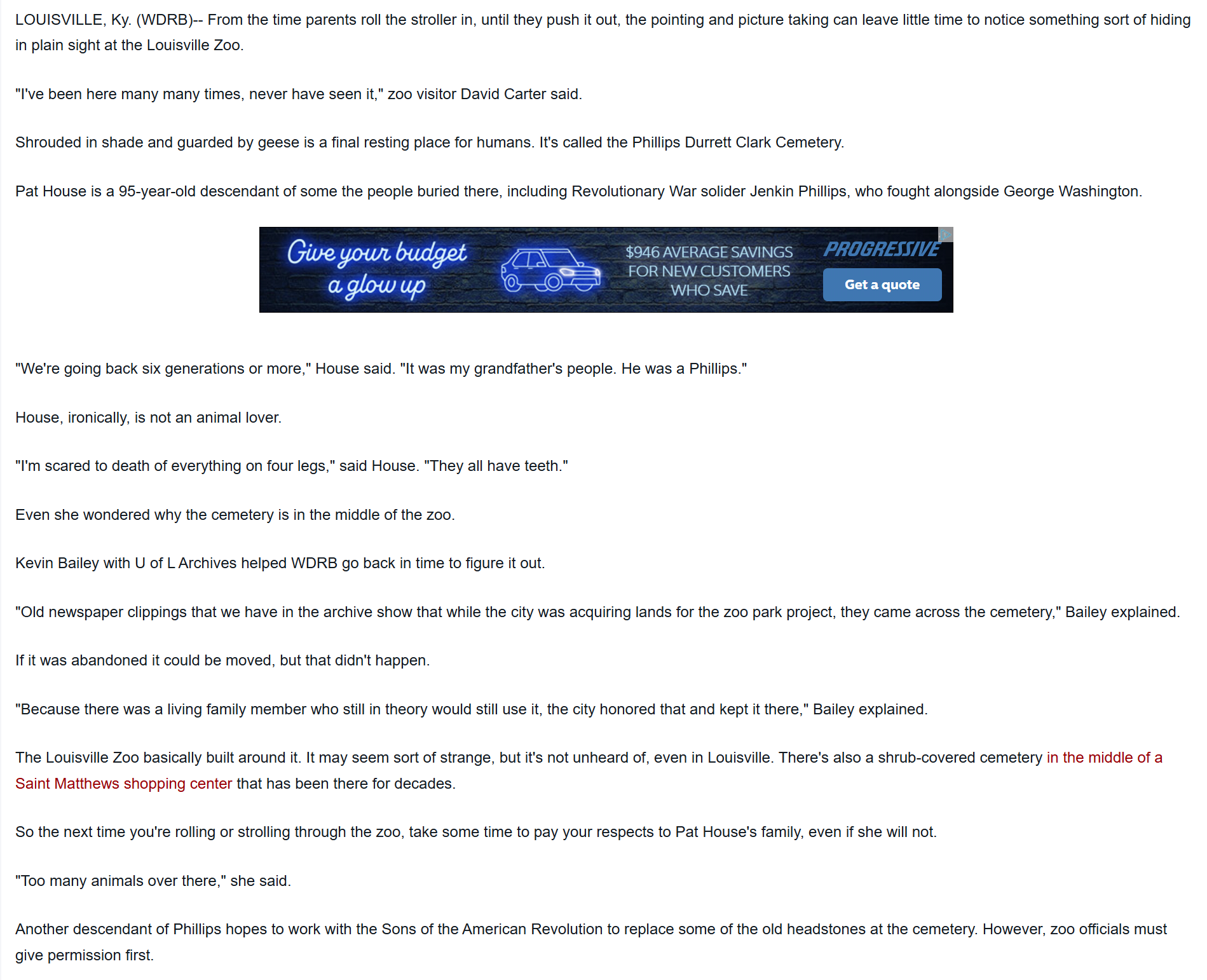
I reached out to the author of the story to correct the narrative that the cemetery had ever been abandoned. I never heard back. I also reached out to Zoo officials and the City of Louisville to let them know that the cemetery has never been abandoned and that there are still living descendants of Jenkin Phillips in the city.
This story was published in 2025 and echoes the same “abandoned cemetery” story, a reminder that the historic record only stands until someone with additional information comes along.
This cemetery was abandoned in the same way that Christopher Columbus discovered the new world.
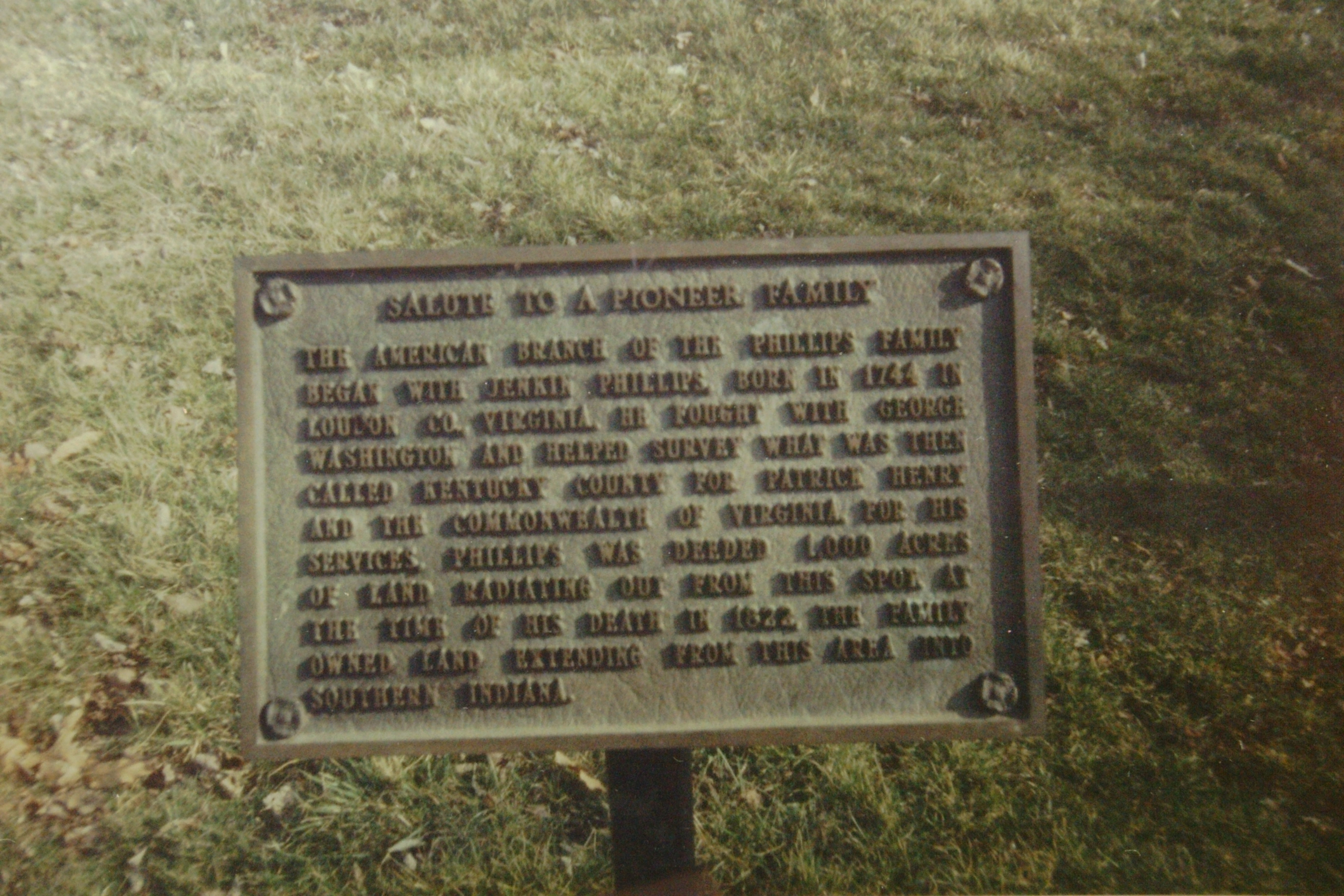
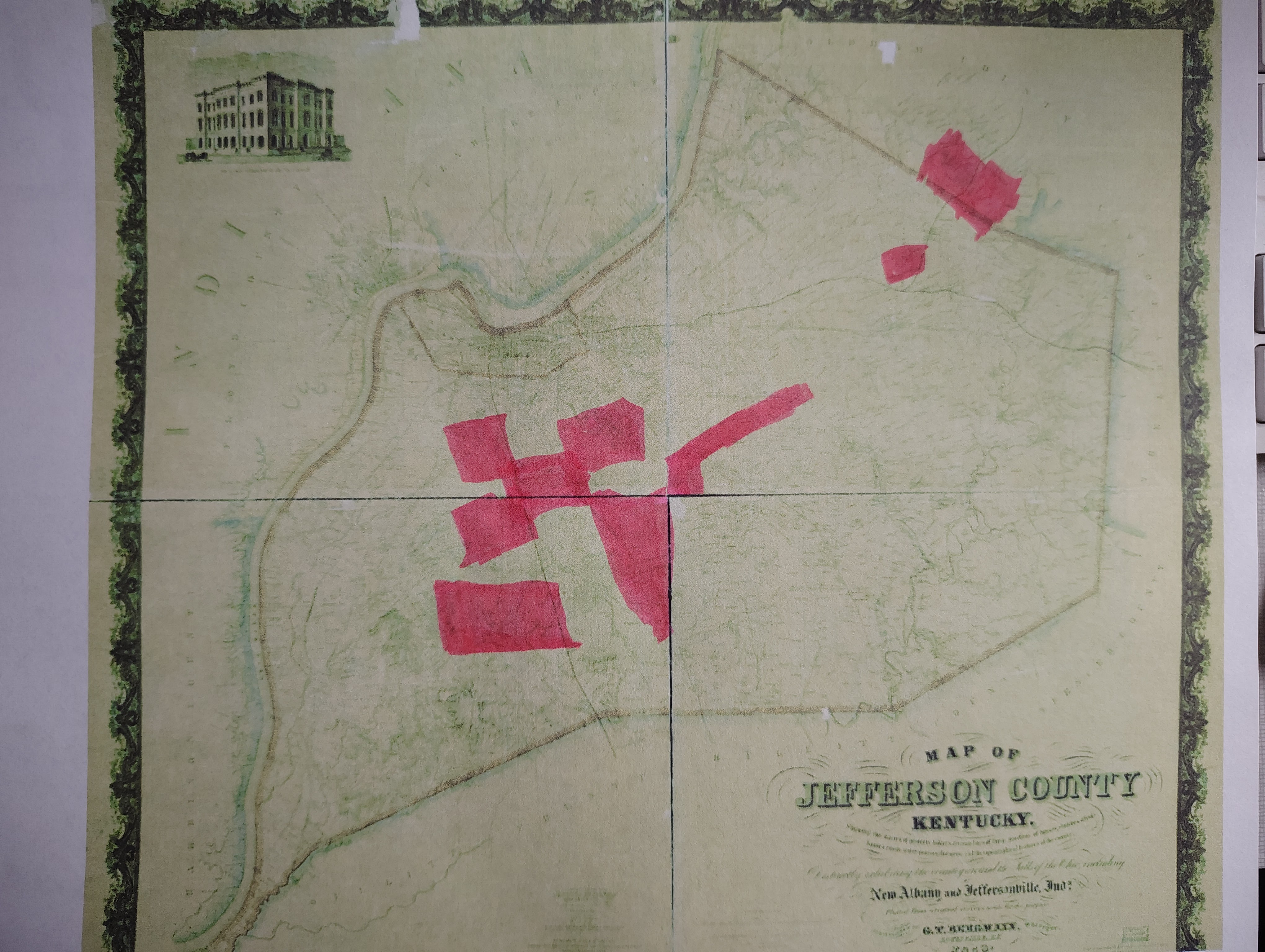
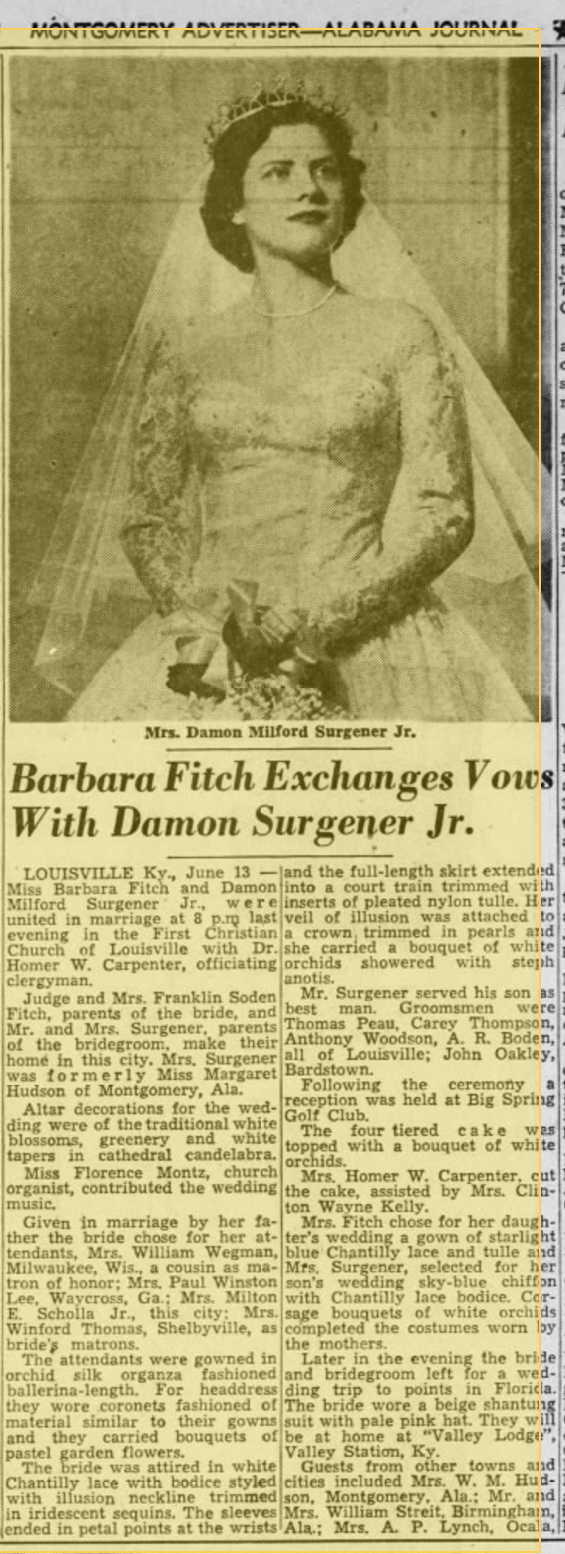
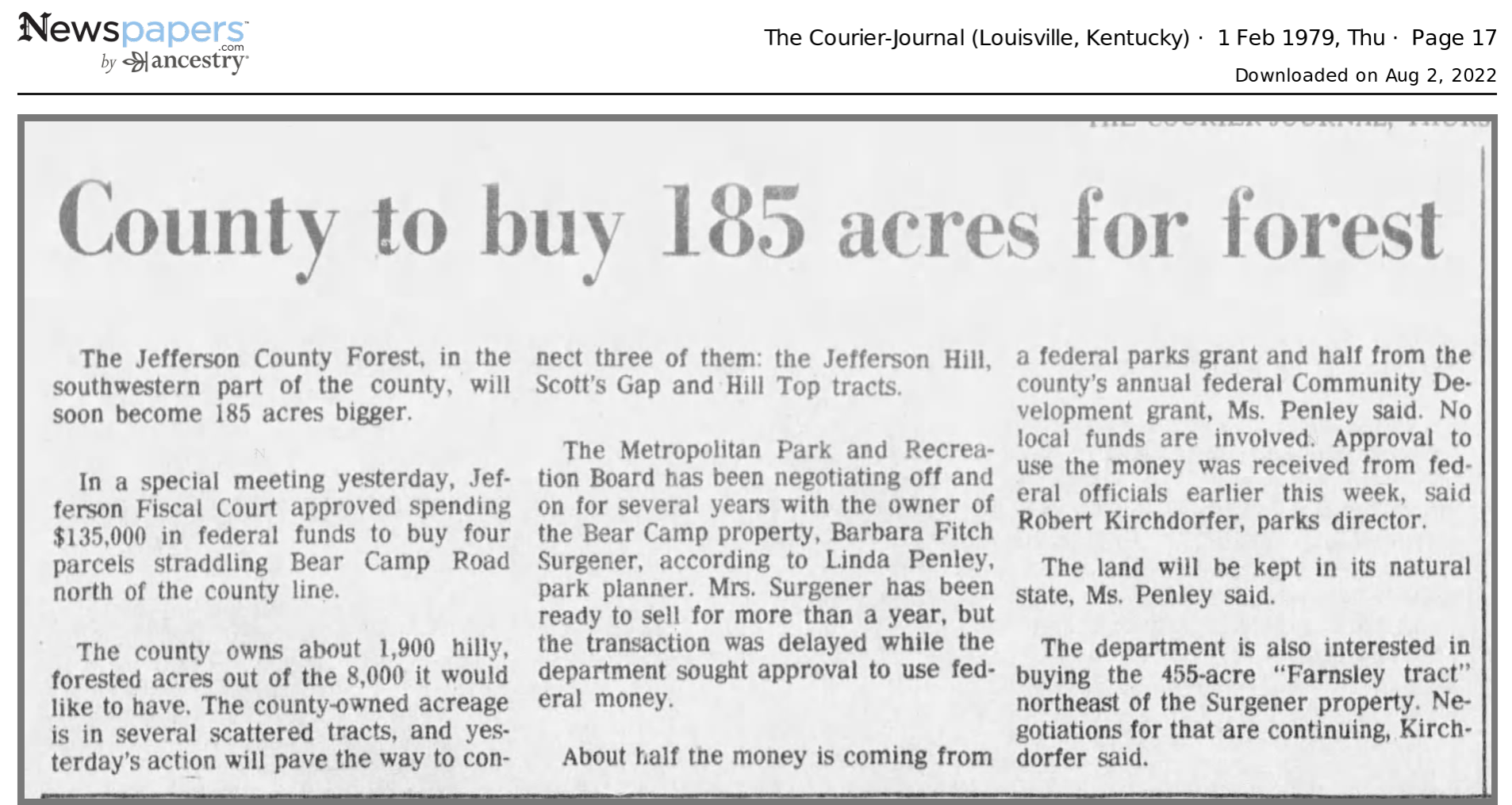
As far as I know (see what I did there? It isn’t hard.) my grandmother owned the last piece of the Phillips land until 1979. This land was called my grandmother’s farm and she and my grandfather lived there after they were married. The only thing I remember hearing about the farm is that it still had an outhouse outside of the old homestead and it was called the “Valley Lodge” and was in Valley Station. My grandmother died when I was in Kindergarten so I did not get to hear many of those stories. That land she sold to the city became Jefferson Memorial Forest.
OK, so now on to the wild part.
When my grandfather went into hospice, I asked my friend Joan Hale to help me research some facts for his obituary. One day she called me and asked me if Evan Williams was a real person. Yes, I told her, in addition to being the first known licensed commercial distiller in Kentucky, he also owned a brick factory and was the wharfmaster, among other things.
“Well I think he married into your family!”
I beg your finest pardon? So yes, as it turns out, Evan Williams married one of Jenkin Phillips’ daughters, Hannah, and is my 5th great granduncle.
And I think he might be buried at the Louisville Zoo.
At a Colonial Dames meeting where I was speaking about Louisville history a couple of years ago. one of the members approached me to say that several of the graves at the Louisville Zoo had been moved in 1979 or 1980 and that she may have photographs from the work. It’s true that graves have been moved into and out of that cemetery over the years. When they were building the Watterson Expressway they found a bunch of children’s graves and moved them to that cemetery. (Not for nothing, but that was between 1948-1972, so the argument that no one knew about the cemetery has another mark against it.) There is also a lot of reference to some of the graves being moved to Cave Hill.
So why do I think Evan Williams is buried at the Louisville Zoo? First, no one knows where he is buried. Yet. Local historian Rick Bell once told me he was likely buried at the Old Pioneer Cemetery. I’ve not actually gone out there and walked around and looked, and it would be great if I did one day and there he was. A lot of the markers have been lost to time, so he could just be untracable at this point.
But knowing what I know about this family – that many stayed close and married into other pioneer families and were often buried together – I have to wonder whether Evan Williams was buried on his father in law’s farm.
Evan Williams died in 1810. Jenkin Phillips, Jr. died in 1811. Hannah Butcher died first in 1819, followed by Jenkin Phillips in 1822. There were an estimated 14 graves in the Phillips-Durrett-Clark cemetery before the additions and subtractions. Williams was likely pretty poor when he died, as his wife remarried almost immediately in 1812. It would make sense to bury him on the family farm instead of trying to pay for burial in a commercial cemetery.
Somewhere out there is a Williams family descendant with some answers. Until someone presents evidence to the contrary, I will continue to believe that Uncle Evan is also buried at the Louisville Zoo. In the never-abandoned family cemetery that my family has always known about.
ADDENDUM
Here’s some interesting information I forgot that I had received from Sharon Pike of the Meriwhether Society in 2024:
“I grew up in Louisville and the Meriwethers of Louisville are one of my main research interests. Jenkin Phillips’ daughter Hannah married Evan Williams. (2nd William Dubberly)
Hannah and Evan Williams’ daughter, Lydia Clark Williams, married David H. Meriwether. The Meriwethers first came to Louisville in 1779 and had adjoining farms in the area of Eastern Parkway and Poplar Level Road.
The farm where John Clark (father of George Rogers Clark and William Clark) settled was purchased from the Meriwether family.
The Meriwether and Schnitzleburg neighborhoods were a subdivision of one of their farms, and the streets named Meriwether, Lydia, Samuel, Mary, Charles and Julia in the area of St. Michael Cemetery are named for Meriwethers.
I know they owned land along Beargrass Creek. Joe Creason Park (across Trevillian Way from the Louisville Zoo) was owned by Basil Prather who married Fanny Meriwether.
Their descendants are buried in the cemetery at the park. So, that area was a hotbed of Meriwethers.”
The Phillips family married into both the Clark and Meriwhether families of the Lewis & Clark Expedition. Meriwhether Lewis’ mother was a Meriwhether.

