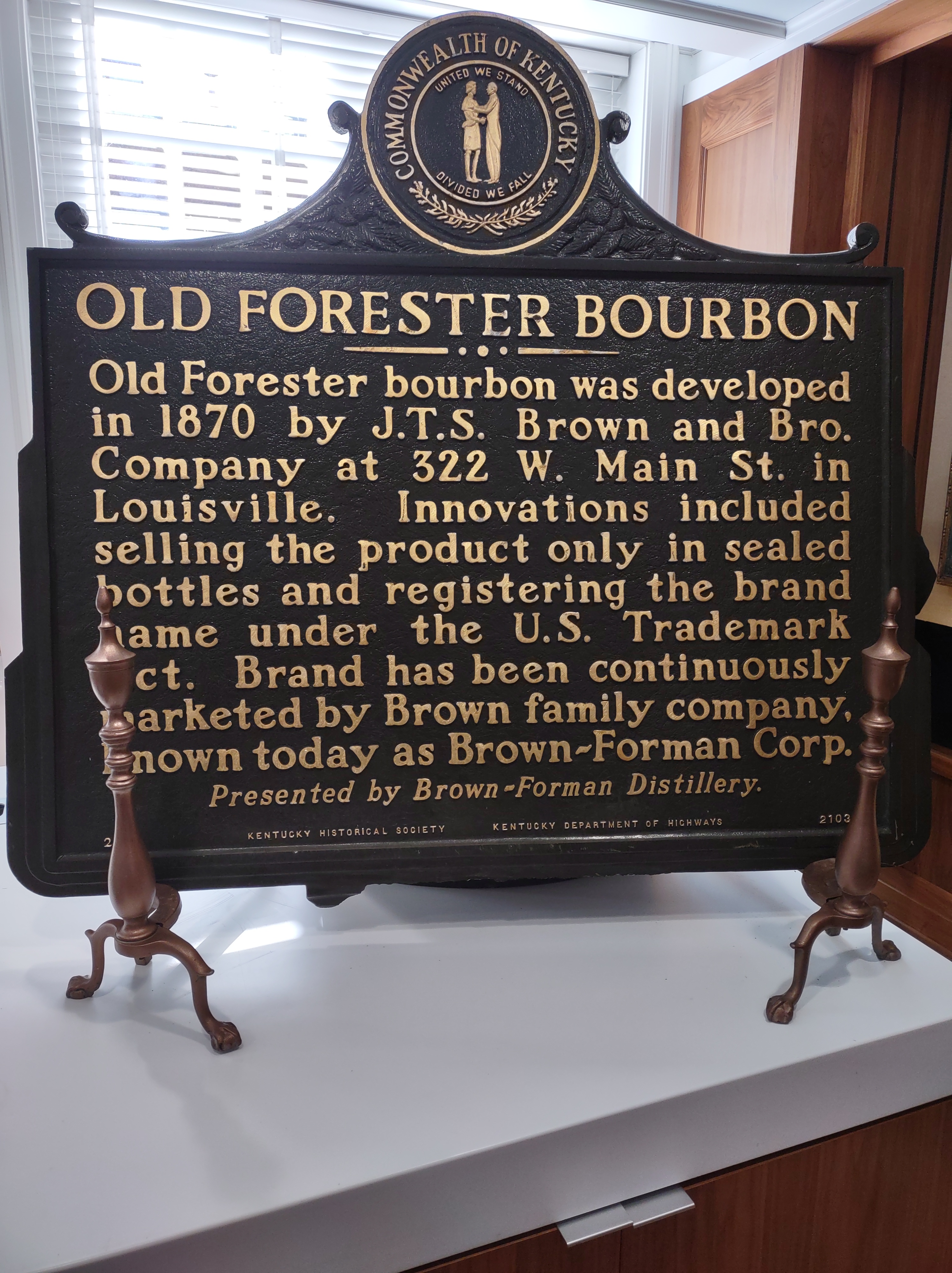
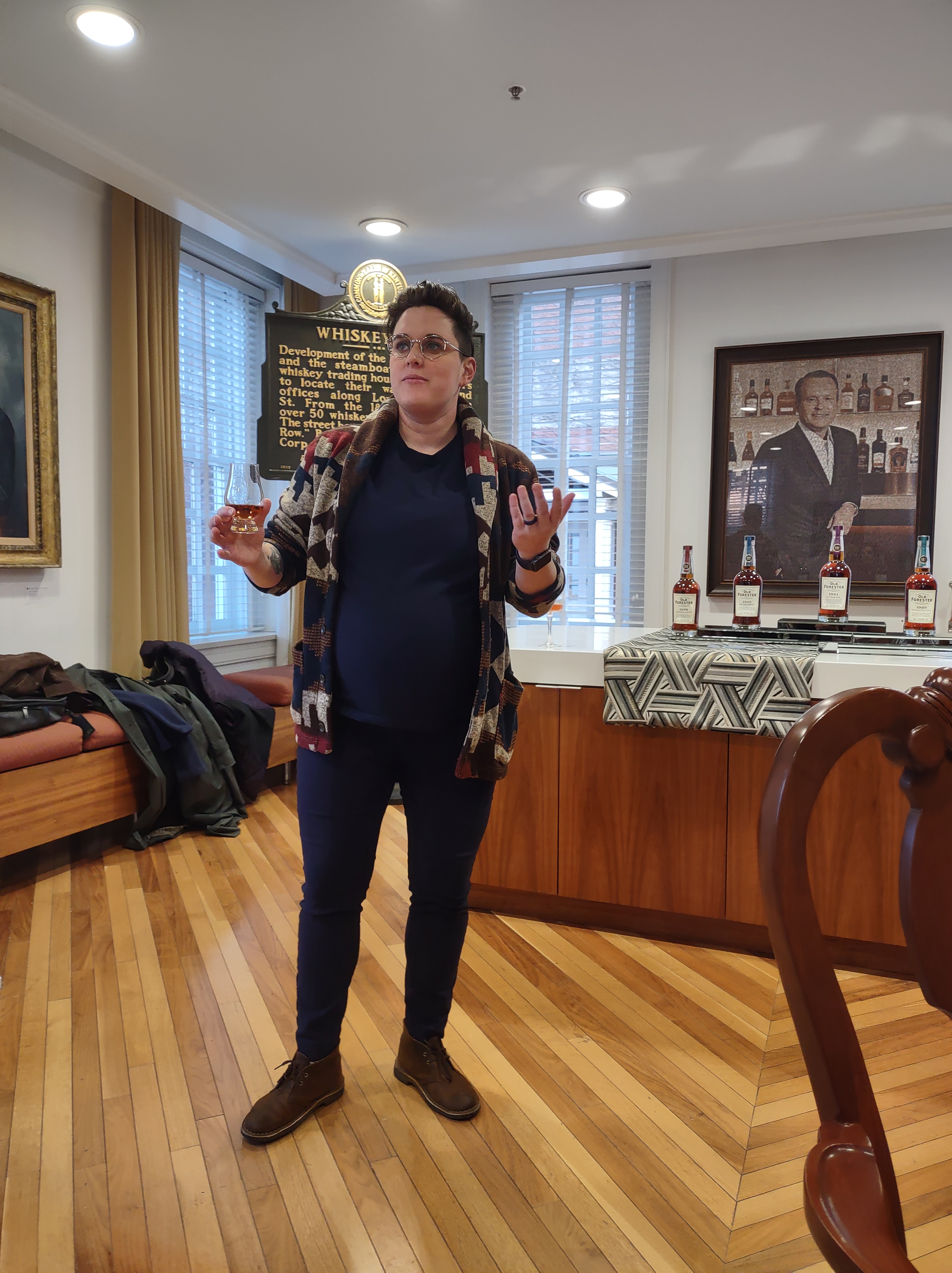
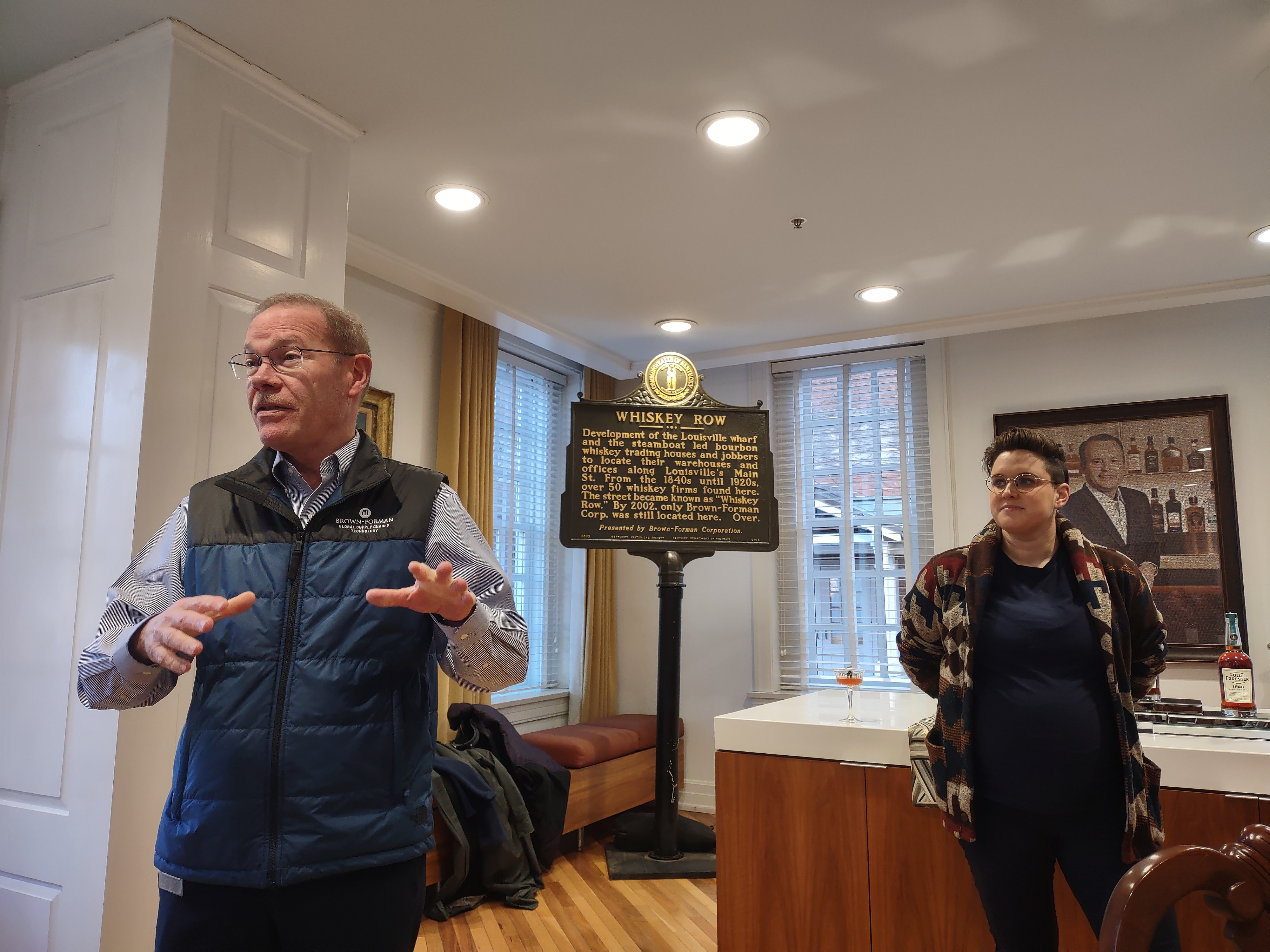
The nice thing about living in Louisville (did I mention I’m a 9th-generation Louisvillian?) is that I can get to any major Bourbon distillery in 45 minutes or less. Brown-Forman’s global headquarters is a cool 24-minute drive for me, so I try to make it to as many of their press releases as I can. Today we did a lunch and learn in Founders Hall, part of the Shively Brown-Forman campus I had not yet had the pleasure of visiting. Chris Morris and Melissa Rift led us through some informal programming.
Chris Morris started us off with a bit of poorly understood Prohibition history. When Prohibition was enacted, there was very little guidance for distilleries on how to proceed. Selling whiskey for drinking purposes was illegal, as was producing whiskey, but selling whiskey for medicinal purposes was fully legal. All of these distilleries still had barrels of whiskey, which meant that a lot of it was getting stolen or sold under the table. Distilleries that were still in business could apply to get a permit to sell their whiskey to druggists, but that soon proved to be a paperwork nightmare. The idea of consolidated warehouses and limited licenses came into play a few years in, right around 1924.
So distilleries would then sell barrels of whiskey to the consolidation warehouses and those barrels would either be bottled under that distillery’s brand name or under a different brand’s name. McKenna is a great example of this — McKenna sold barrels to A. Ph. Stitzel and A. Ph. Stitzel would bottle under the McKenna name. This “handshake deal” would later come under fire when the McKenna brand was going out of business in the 1940s and the consolidators wanted proof that they still owned their brand, but that’s another story.
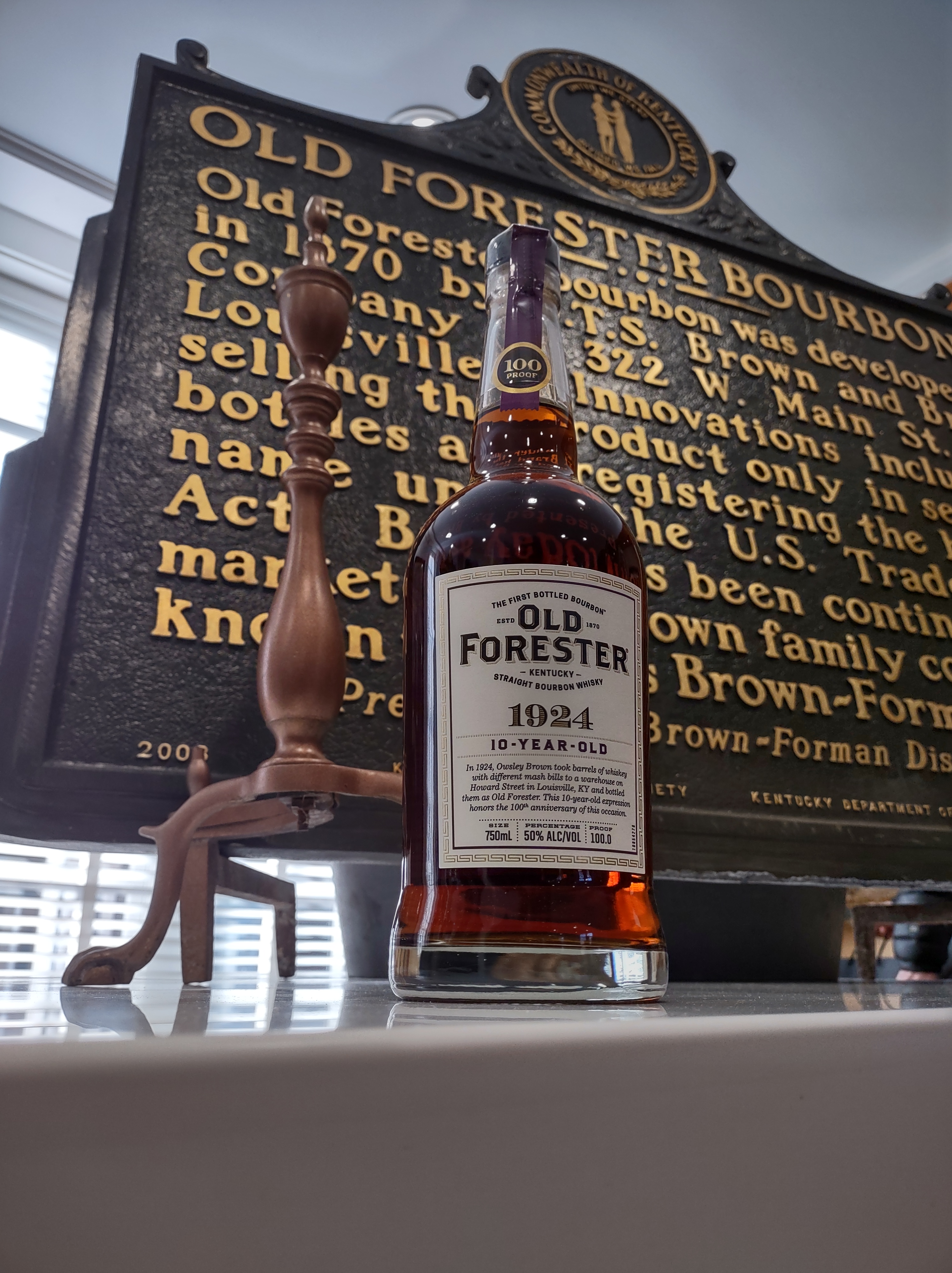
Brown-Forman was one of those six distilleries in Kentucky with medicinal licenses, so of course they were also buying barrels of whiskey from other distilleries and bottling under various names. That’s where the idea for this release came from. This year is 100 years from the advent of that
The mash bill for Old Forester 1924 has 7% less rye and 7% more corn than the standard Old Forester. It’s beautifully viscous with notes of baking spice, stonefruit, and leather. It’s what Michael Veach would call a “book whiskey,” something that you would pour when you want to sit in your favorite old leather chair by the fire and read a book. It has a 10-year age statement.
Old Forester 1924 should be out nationwide in small quantities in February. MSRP is $115.
Photos Courtesy of Maggie Kimberl
 LouGirl502
Wow the msrp is high, I wonder if distilleries are trying to get ahead of the secondary market? If people are going to pay it, it might as well be to the people who have skin in the game.
LikeLike
It’s a combination of things. Bourbon’s price was artificially low for decades to compete with clear spirits. A ten year old Bourbon should cost at least 50% more than a high-end vodka like Gray Goose. With something like this that is a limited edition, it makes sense that it’s a little higher than that. I don’t think it should be any higher, and I do think we are going to see an equilibrium in the rising whiskey pieces starting this year.
LikeLike