Being a journalist in a sea of influencers is tough. Sometimes I have to ask difficult questions and research complicated topics. I never take what is told to me at face value, and sometimes it’s exhausting. But I always view it as an opportunity to learn something new, and today I learned something new that I am going to share with you.
I recently wrote a story for Whiskey Magazine about the rise of interstate blends. Brands like Pursuit United, Barrell Craft Spirits, Old Elk, Milam & Greene, and more are combining barrels distilled in two or more states to create a blend of straight whiskeys. It’s a great way to bring in new flavor profiles that typically aren’t available if you’re sourcing barrels from just one state.
All of these producers state right on the label where every barrel comes from. When you have a straight whiskey, like a straight Rye or a straight Bourbon, you have to list the state of distillation on the label. Until today I thought the same was true for blends of straight whiskeys, but for some reason that is not the case.
Today I got an email from a PR person I’ve known for a long time for a blend of straight Bourbons from four states. Three of those states are disclosed and one says it’s a mystery. I asked about the fourth state not being disclosed and was told it was for the fun of the mystery and that the TTB’s legal expert had told them they did not need to disclose it.
So I did what anyone would do in this situation: I pulled the COLA and started reading the standards of identity for a blend of straight whiskeys. Those two pieces of information did not give me the answers I was looking for, so I did the next best thing: I asked two people who would know.
Steve Ury and Chuck Cowdery have blogged extensively about the lax enforcement of the TTB rules over the last decade. Steve Ury is the person who taught me how to look up COLAs on the public registry almost a decade ago. And Chuck has been around the business long enough that he’s seen it all and has an opinion on it all.
It turns out when you have a blend of straight whiskeys from different states, you do not, in fact, have to disclose the states on the label. Color me shocked.

If you look here under subsection 5.63, you can see that the state of distillation regulation only applies to certain categories of whiskey. So I went to see which whiskeys fall under c2-c7:

You can find the above information here.
Now I am concerned that the growing popularity of blending whiskeys from different states is going to result in a new issue for whiskey consumers: producers not disclosing where the whiskey is from. What I love about brands like Barrell Craft Spirits is that they have always put tons of information on the label, including where the whiskey is from, and sometimes additional information like the derived mashbill (I cannot even fathom the math that goes into figuring this out) and the ages of specific barrels in the blend. Consumers tend to appreciate this level of transparency.
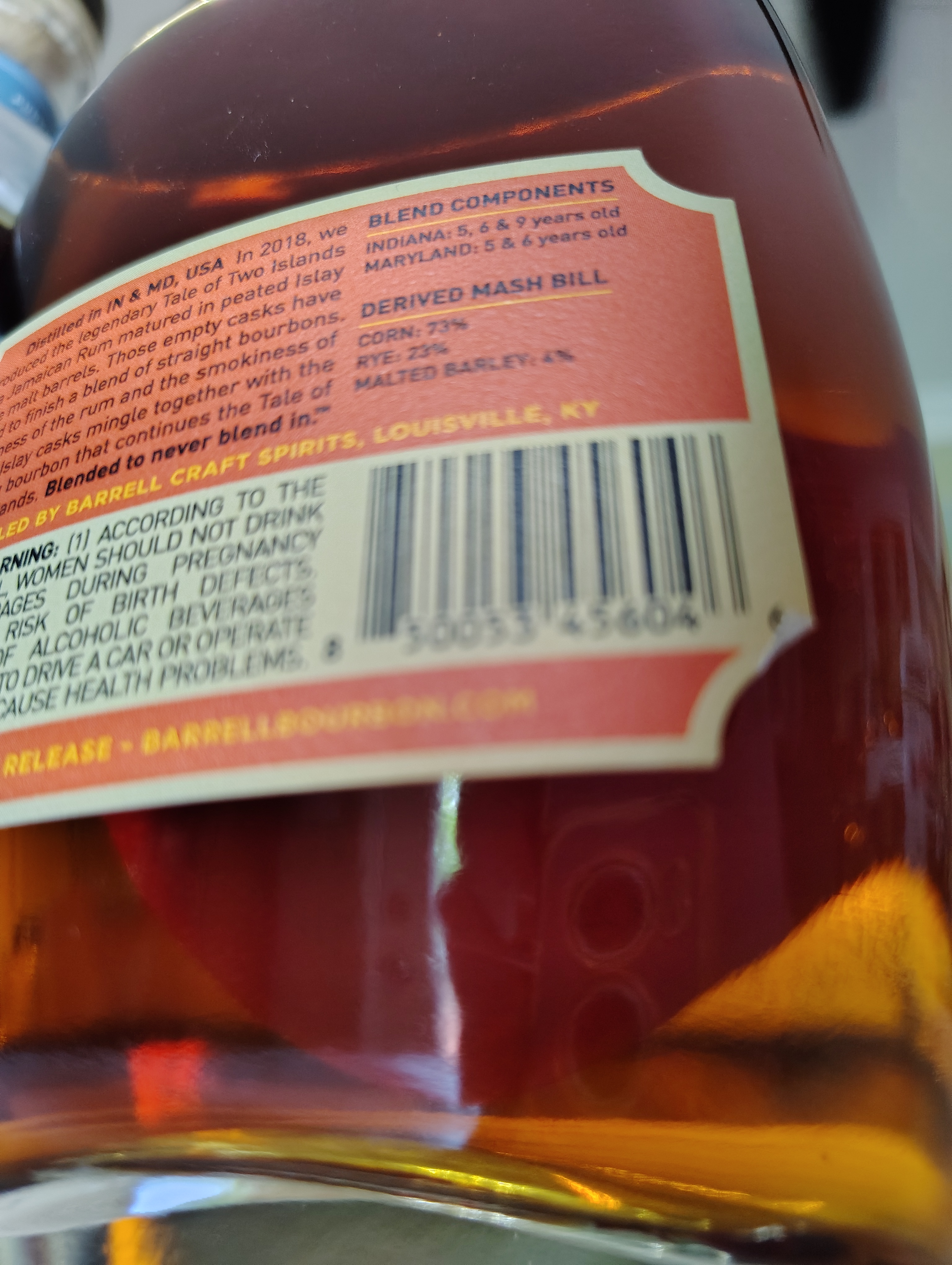

When I collect the blind review samples for American Whiskey Magazine, I try to let folks know that samples that don’t have complete information, including state(s) in which distilled, will not be reviewed. That’s because that is one of the pieces of information I furnish to our tasters and it is printed in the magazine with each review. That’s our rule, which apparently differs from the TTB’s rule.


Above are reviews from issue 23 of American Whiskey Magazine. Those two Pursuit United bottles are the same ones photographed above.
I hope that producers continue with the level of transparency we’ve seen out of successful brands. I can see one day someone wanting to just bottle a bunch of sourced barrels from one distillery but not wanting to disclose what state they were distilled in so they blend in a barrel from another state so they don’t have to disclose it. That would be a bummer. I also have a feeling that it wouldn’t sell well, because consumers are more discerning than ever and their disposable income is growing tighter. As the industry old-timers often say, it’s easy to sell that first bottle, it’s harder and more important to sell the second bottle.
Anyway, here are some of the great articles I read today when I first began looking for answers. Here’s one from Chuck Cowdery and one from Steve Ury. Technically I don’t have time to be writing this so it’s back to work for me. Cheers!
 LouGirl502
Late to respond, but of note these types of whiskey are also allowed up to 2.5% coloring and flavoring without any disclosure.
LikeLike