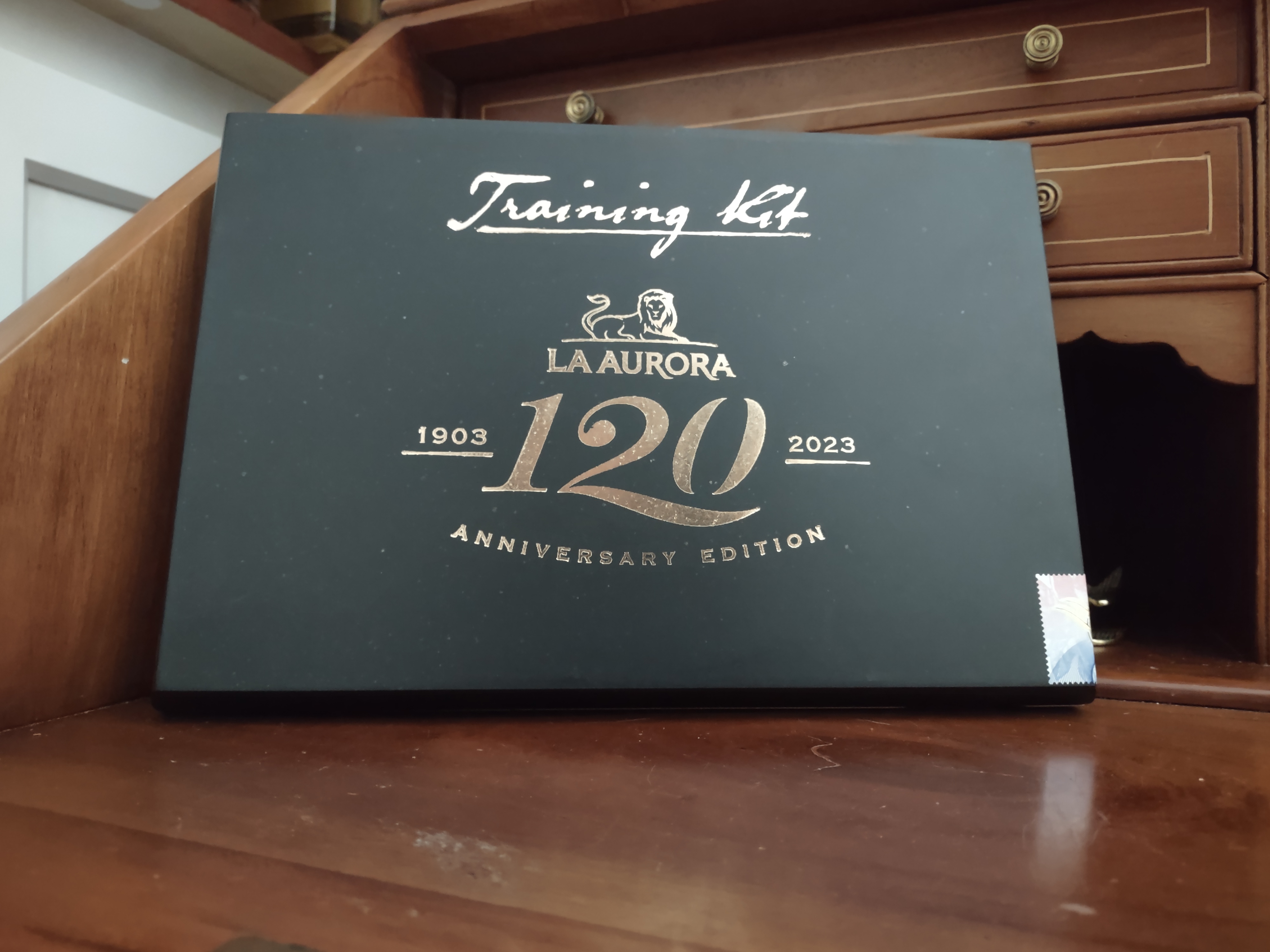
I was invited to a virtual blending seminar hosted by Manuel Inoa of La Aurora Cigars. I received a training kit in the mail that included 4 pure grade cigars — these are cigars that contain just one type of tobacco to demonstrate its predominant characteristics — and one final cigar as well as a cutter and a lighter. I joined the Zoom meeting and got started.
The first part of the meeting was all about cigar basics, which I needed to learn. I’ve been to Nicaragua and toured the Drew Estate factories and learned a lot about the fermentation of tobacco leaves as well as the construction of cigars, but there is a void in my knowledge when it comes to what parts of the plant are used for different purposes, the differences in the soils in different regions, and how weather and climate affect the flavors in the tobacco. Fortunately, Señor Inoa had several slides detailing every step including land and soil, variety of seed, weather, leaf priming, grower, curing, fermentation, and aging.
I know that Nicaragua has volcanic soil, which often comes out as minerality, earth notes, and salinity in the tobacco. Different soils produce different flavors in the tobacco, much like terroir in wine. The climate in which the tobacco is grown is also important. Too much rain can be good for combustion but not good for flavor. Extremely hot weather can be great for combustion by creating more oil in the plant, but again it’s not great for the flavor. The best time of the year to grow tobacco in many of the major growing regions in Central America is November, December, and January, and some regions can get favorable results into April.
Leaf priming was a totally new concept to me. I know that different leaves are used for different things, but I had no idea how many different circumstances go into selecting the right leaf for the job. The leaves at the bottom of the plant are called volado and are not typically used in premium cigars. The leaves just above that are called seco, above that are viso, and above that are ligero. He also explained that the flowers at the top of the tobacco plant are often cut off to allow the flavors to develop in the leaves.
Once the tobacco is cut it goes to the curing barn, where it spends about 45 days. This is when the leaves turn from green to brown, and this is a crucial step in the process — without enough time curing, the tobacco won’t burn and that cannot be corrected during fermentation. Fermentation processes vary widely and take various amounts of time. after the construction of the cigar, they have to cure to reach the correct and consistent humidity before being shipped out. All in, getting a premium cigar to a consumer can take upwards of 3 years.
So then it was time to learn about blending cigars. I’ve taken many blending seminars in the whiskey world and I’ve even tried my hand at blending whiskey, and it’s a very similar process. You try the components on their own and then see how they work together. The main difference between blending cigars and blending whiskeys is that cigars take so long to be ready for use, whereas you can blend already matured whiskeys six ways to Sunday and come up with a great combination right away. Both take years of experience to master.
Here’s the breakdown of the pure grade component cigars:
- 1: San Vicente, seco, Dominican Republic, predominant notes of espresso, clove, walnut, and white pepper
- 2: Corojo, Habana seed, Dominican, predominant notes of cafe au lait, guava, white pepper, and oak
- 3: Olor Carbonel, a hybrid of 2 Olor tobaccos hybridized by someone named Carbonel, Dominican Republic, ligero, predominant notes were saddle leather, black pepper, cedar, slight caramel finish, eucalyptus, and salinity. This one was very strong in flavor profile.
- 4: Piloto Cubano, Dominican Republic, ligero, predominant notes were paprika, almonds, dark chocolate, mineral, peppery spice, and forest. Interestingly, this one had a different color ash, which I did not know was even a thing. This one was very spicy in flavor profile.
The final result was the La Aurora 120th Anniversary cigar, which was an incredible balance of these tobaccos. The wrapper was the Dom Habano 92 Corojo, the binder was the Olor Carbonel, and the fillers were the San Vicente and the Piloto Cubano. It was creamy with notes of milk chocolate, cedar, faint minerality, walnuts, cloves, and a surprising note of starfruit.
It was a lovely seminar and I learned a great deal from it. Looking forward to the next opportunity!

Photos Courtesy of Maggie Kimberl
 LouGirl502